

Learn what phobias are and how to write believable characters whose fears create conflict, shape their choices, and move your story forward.
What Is A Phobia?
A phobia is an intense, persistent fear of a particular object, situation, activity, or living thing. It can cause a person to experience severe anxiety and go to great lengths to avoid what they fear.
The word phobia comes from the Greek word phóbos, meaning ‘fear’.
For writers, phobias provide a source of conflict, reveal a character’s vulnerabilities, and force them to make difficult choices. To write about a character with a phobia convincingly, it helps to understand how these fears affect people.
What Are The Symptoms Of A Phobia?
Phobias can cause both physical and emotional symptoms. These include:
- Dizziness or light-headedness.
- Breathlessness.
- A racing heart.
- Sweating or trembling.
- Nausea.
- A feeling of losing control.
- An intense fear of dying.
- A strong urge to escape or avoid the feared object or situation.
Phobias vary in severity. Some people feel anxious at the thought of facing their fear, while others experience panic attacks. They recognise that their fear is excessive but still struggle to control it.
What Are The Three Main Types Of Phobias?
Phobias fall into three broad categories.
1. Social Anxiety Disorder
An intense fear of being judged, embarrassed, or rejected in social situations. A character could avoid meeting new people or dread public speaking.
2. Agoraphobia
Fear or anxiety about situations where escape is difficult or help unavailable, such as crowded places, public transport, or leaving home alone.
3. Specific Phobias
An intense fear of a particular object or situation, such as animals, heights, storms, blood, injections, flying, or enclosed spaces.
How To Write About Characters With Phobias
A phobia can create conflict and reveal a character’s vulnerabilities. Research the specific fear rather than relying on stereotypes.
- Identify The Trigger. Define exactly what your character fears and show how they react when confronted with it. A character afraid of dogs panics when one approaches, even if it poses no threat.
- Show The Impact. Show how the phobia shapes your character’s daily life, relationships, and decisions. Their attempts to avoid the fear can create problems and affect their opportunities.
- Create Conflict. Put your character in situations where their phobia threatens their goals. A character who fears enclosed spaces has to enter a lift to rescue someone, forcing them to confront their fear.
- Develop The Character. Make the phobia an important part of your character’s identity and the story. Show how it shapes their choices, relationships, and actions, while giving them other qualities that make them feel real.
- Do Your Research. Research the specific phobia using reliable psychological resources and first-person accounts. Show how the fear affects your character’s thoughts, physical reactions, and behaviour in believable ways.
Examples Of Books Where Phobias Matter
| Book | Author | Phobia | Why It Works |
|---|---|---|---|
| The Woman In The Window | A. J. Finn | Agoraphobia | Anna Fox rarely leaves her home. Her fear shapes her isolated life and becomes central to the thriller’s suspense. |
| Heights Of Fear | Lucas Klauss | Acrophobia (fear of heights) | The protagonist must confront his fear of heights, making it an obstacle he must overcome to achieve his goals. |
| Fear Itself | Jonathan Nasaw | Multiple phobias | The thriller explores how phobias can be exploited to create fear, danger, and suspense. |
Three Fun Phobias For Authors Of Speculative Fiction
These unusual fears could inspire fantasy, horror, or science fiction stories:
- Kinemortophobia – Fear of zombies.
- Sanguivoriphobia – Fear of vampires.
- Lycanthrophobia – Fear of werewolves.
I thought I would add this list of phobias associated with literature for fun.
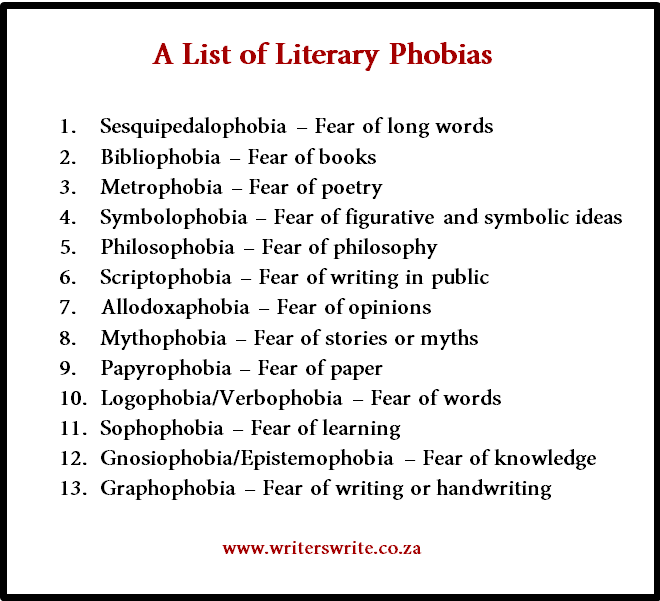
You will find a complete list of phobias here: Wikipedia Phobias
The Last Word
A character’s phobia can create tension and complicate decisions. Research the fear carefully, show how it affects the character’s choices, and use it to develop the story rather than relying on it as a shortcut to drama.
Photo by Aleni Stoakes on Unsplash

by Amanda Patterson
© Amanda Patterson
More posts from Amanda:
- 3 Simple Ways To Make Your Hero Fight Back
- 7 Reasons To Write The Ending Of Your Novel First
- How To Make Readers Care About An Amoral Protagonist
- Why Revenge Is A Brilliant Plot For First-Time Writers
- The 5 Top Tips For Turning Memories Into A Memoir
- How To Write A Locked-Room Mystery: The Secret To The Impossible Crime
- 10 Ways To Get Out Of A Writing Rut
- What Is A Denouement? How It Works In Fiction
- How To Name Characters: 10 Things To Consider
Top Tip: Sign up for our free daily writing links.